Hire Top Talent in AI, Blockchain, and IoT for Innovative Solutions
Embrace the future with our cutting-edge tech talent. Harness the power of AI, Blockchain, IoT, and more to drive innovation and stay ahead of the curve.
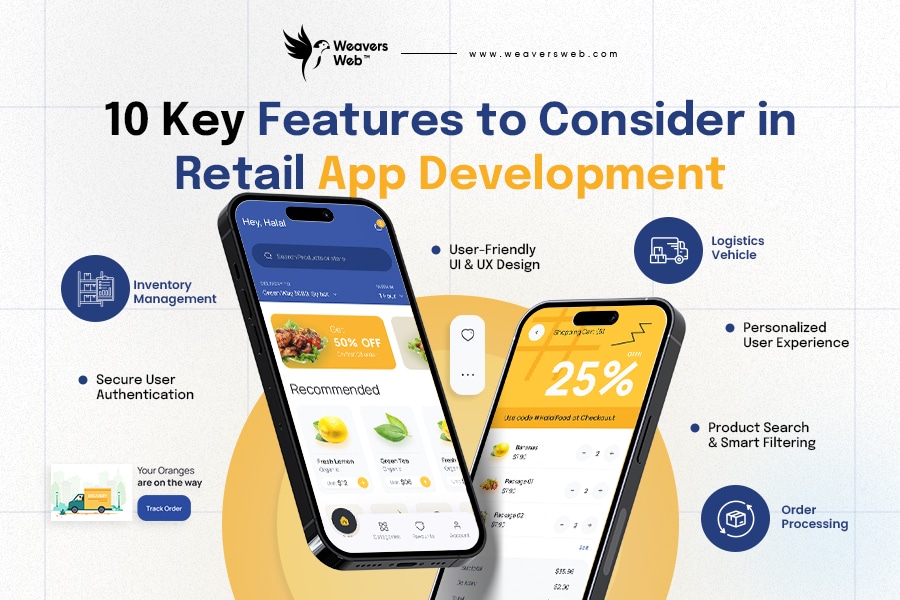
10 Key Features to Consider in Retail App Development 2025
August 6, 2025
The retail landscape has undergone massive and dramatic transformations over the last decade and beyond. It is no longer limited only to the physical stores but has expanded to a mobile shopping experience. Customer expectations and behavior have been evolving, and so has the retail landscape, which needs to adapt accordingly, keeping these changes in mind. The present customers focus on convenience, speed, as well as personalization, all of which are possible through smartphones. Mobile applications have become the cornerstone of this transformation, acting as a pivotal tool that attracts, engages, and retains customers.
This is why companies are focusing on retail app development, which is highly powerful in converting users into buyers. The application can drive massive growth for the retail brands. However, you need to make sure that the application is built properly. It requires more than just a product online and should focus on offering an intuitive experience to users through effective features that cater to ever-changing customer expectations. Each of the elements in a mobile application plays a vital role in bringing maximum engagement and conversions. When planning to develop an application solution for retail, it is essential to ensure that the core functionalities are appropriate.
This blog explores the essential features that should not be overlooked when developing a retail mobile application.
Why Develop a Retail App in 2025?
In 2025, we are witnessing massive digital transformations, where mobile applications play a vital role in shaping the retail experiences of present-day users. Have you ever wondered what has contributed to the immense popularity of retail applications?
The first and foremost reason is the increase in mobile shopping, which is not showing any signs of slowing down. Modern consumers are highly dependent on mobile phones and are increasingly app-focused. They expect a complete, personalized, fast, and secure shopping experience. Organizations focused on developing retail app solutions can utilize data analytics, personalized marketing, and streamlined logistics.
In addition, retail applications tend to offer better control over branding, improve customer retention rates, and the ability to prioritize exclusive deals and offers directly to consumers. In the present era, mobile applications are the centre of focus of the retail landscape as the competition is rising fiercely than ever before.
The Must-Have Retail App Development Features
Every successful retail application must have certain essential features that not only enhance the user experience but also drive engagement and streamline business operations. Wondering which features to integrate into your retail app?
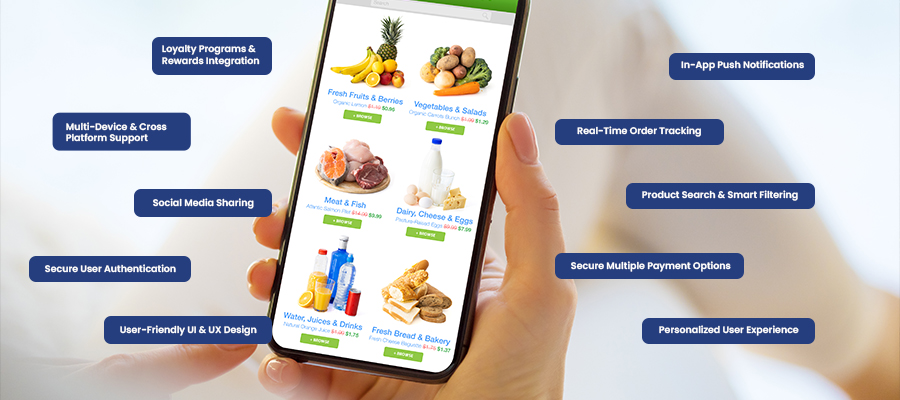
Here are the top 10 must-have features that can make your retail app development stand out.
User-Friendly UI & UX Design
First impressions are important for both people and applications. If the user interface of an application is clean, visually stunning, and intuitive, it has the power to directly impact customer satisfaction. With user-friendly UI and UX design, users can navigate and explore the application smoothly without any hassle. A proper UX design also reduces the number of clicks required to complete a purchase, thereby increasing the conversion rates. Make sure to include clear CTAs, brief labels, and a consistent design across the application.
Secure User Authentication
Security is paramount and in no way can be negotiable. By integrating highly secure login mechanisms, such as multifactor authentication (MFA), biometric login through fingerprint or face recognition, or OAuth-based social login options, it helps establish trust with users. At times, retail applications tend to store financial and personal data. As a result, it is vital to implement industry-standard encryption and GDPR -compliant practices. Enabling a hassle-free login process along with high-end protection tends to improve UX as well as the credibility of the application.
Personalized User Experience
Personalization is the key to modern business. When planning to develop retail app, brands must prioritize personalized user experience by incorporating AI that can easily analyze the recently viewed items and user behaviour in order to provide custom recommendations and homepage content. Personalized notifications, birthday offers, and even cart reminders can help enhance the user experience. Additionally, it improves user engagement and increases the average order value of the retail application. Therefore, this feature is extremely essential, as it can help build loyalty among customers.
Secure Multiple Payment Options
Payment flexibility is a highly essential feature. While building a retail app, make sure to integrate multiple payment gateways that include credit and debit cards, UPI, various digital wallets, net banking, and even Pay Later options. When you offer a secure and smooth transaction option, cart abandonment issues also decrease. Look out for PCI DSS compliance, along with end-to-end encryption, which helps safeguard user data. By investing in diverse and safe payment methods, you can enhance the conversion rates.
Product Search & Smart Filtering
Another vital feature to include in a retail app is a smart filter option for product search. Shoppers must not struggle to find a product in your app. A powerful search engine that provides autosuggestions, typo corrections, and smart filter options can help you find products easily. Also, in the present moment, image-based search and voice search have gained immense popularity and are helping in improving user experience. Additionally, integrating artificial intelligence into search options can further assist with the search process, thereby enabling faster product discovery.
Real-Time Order Tracking
Transparency is not an option but a top priority, especially during post-purchase, to help in building trust. Therefore, incorporating a real-time order tracking feature should be prioritized, as it enables customers to keep track of their delivery status, shipment locations, and estimated arrival times. The application can also be integrated with push notifications and SMS in order to keep the users updated about every moment of the delivery journey. By incorporating this feature, you can experience reduced customer service queries and also establish a professional image for the brand. In fact, advanced retail app development teams are opting for live map views, ensuring more transparency.
In-App Push Notifications
Want to enhance your retail engagement? Enabling the push notifications feature can help you achieve that. These notifications help users return to the application, informing them about various sales and offers, restocked products, and personalized discounts available. However, the feature must be incorporated in a way that allows it to analyze the user’s behavior, location, and preferences to deliver smart recommendations. Try to categorize your audience and then enable teh automated messages. According to studies, retail applications with push notification features have reported an almost 88% higher engagement rate.
Social Media Sharing
Social media platforms are highly powerful and enable users to share their product details easily. Retail applications must integrate social media sharing, thereby allowing users to post about their wishlist, purchases, and even discount codes directly on social platforms. From Instagram and WhatsApp to X and Facebook, these social media help in enhancing the organic reach. In the present digital era, this feature is a must-have and should not be taken for granted.
Multi-Device & Cross-Platform Support
When opting for retail app development, make sure that your application works everywhere and across all devices. The app must function smoothly on both iOS and Android, as well as across various screen sizes. In addition, if the application has a web version, it should be synchronized with it so that user data, such as the wishlist, cart, and other details, is available across every platform. Opting for cloud-based storage, responsive layouts, and cross-platform frameworks can help you achieve this consistency.
Loyalty Programs & Rewards Integration
Did you know customer retention is more profitable than customer acquisition? With the help of built-in loyalty programs that offer points and various rewards at every level, along with exclusive deals, you can enable your users to earn back. You can make it a game of challenges or referral bonuses. Integrate the CRM or POS with the app, thereby ensuring that your users earn the relevant points and can redeem them online. This feature is fun and also helps your brand build loyal customers for the long term.
Succeeding in the retail landscape requires more than just establishing an online presence in the present competitive world. You have to plan an application with rich and essential features that can improve the overall user experience. Therefore, when planning for retail app development, make sure to incorporate the key features and witness higher engagement, better conversions, and long-term growth of your brand.
Are you looking for a reliable company offering retail app development? Connect with our experts at Weavers Web Solutions today!. For details, visit Weavers Web Solutions.
Frequently Asked Questions
What is a Retail application development?
It is a process of developing a mobile application, but for a retail brand that helps the business to sell the products, manage the inventories easily, and also ensure customer engagement by offering a custom shopping experience.
What are the stages involved in retail app development?
A retail app development comprises of 6 essential stages that include Planning & Research, UI/UX Design, App Development, Testing & QA, Deployment, and lastly, Maintenance & Updates.
Can you share the timeline of a retail app development?
Every application is different, and hence, the timeline for developing the retail applications tends to differ as well. However, on average, an app may require 4 to 6 months to design, develop, test, and deploy.
What features should be integrated into a retail app?
There are several essential features that must be incorporated in a retail application. It includesUser-Friendly UI & UX Design, Secure User Authentication, Personalized User Experience, Secure Multiple Payment Options, Push notifications, and Multi-Device & Cross-Platform Support.
Why are push notifications important in retail applications?
Push notifications help in boosting engagement, and also help users to receive various discounts and offers along with order updates.





 E-Commerce & Marketplace
 Fintech
 Healthcare
 Logistics & Transport
 Travel & Hospitality
 Media & Entertainment
 Education
 Legal
Legal On-Demand
 Fitness
 Social Media
 Job Search
 Real Estate
 Sports
 Fashion & Lifestyle
 Food & Beverage